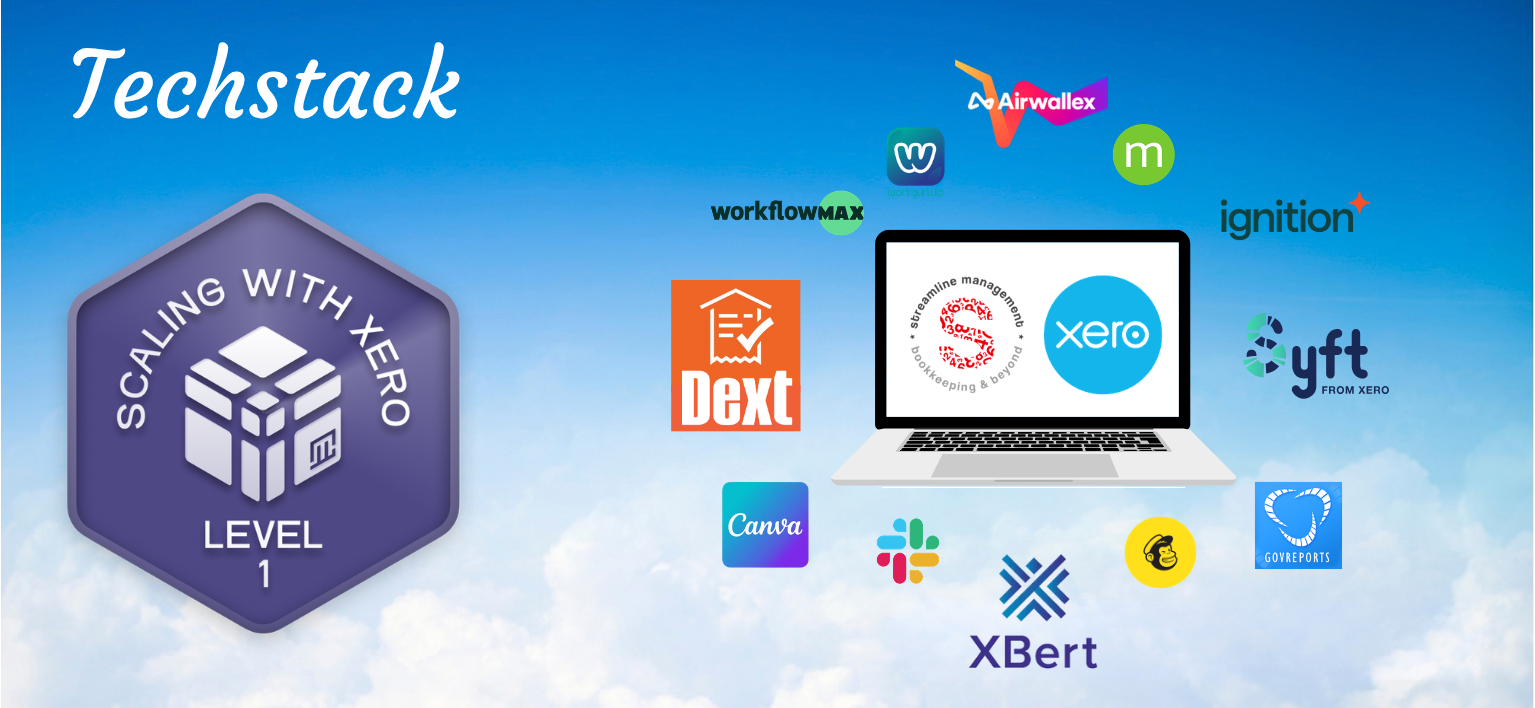
Nicole has added Stackademy Scaling with Xero Certification to her tool belt.
We launched our business into the cloud nearly 15 years ago by switching from desktop accounting software to Xero.
We quickly realised we needed to build an appstack for our business – there were already hundreds of apps that connected to Xero, where should we focus our attention?
Step 1- Compliance (CYA)
Our clients loved Xero bank feeds, but we still need source documents to process the transactions accurately.
Enter ReceiptBank (Dext) to handle source document collection, processing into xero as bills or spend money, independent storage and search (how good is the keyword search??).
Which led to the death of folders on the shelf filled with plastic dividers, the hole punch, stapler remover to line up the corners and then re-staple the documents and the OH&S issue of papercuts!
We needed proper client authorisation to make lodgements with the ATO on their behalf, we found GovReports that would combine digital signatures with lodgement – perfect, that’s one problem solved, in fact 2 problems solved, it was more reliable than the ATO portal, and available on any device (remember the ATO Auskey?!).
To keep client interactions modern from day one, we replaced manual service agreements with slick digital proposals and engagement letters using Practice Ignition (now Ignition).
Step 2 – Internal Operations
Behind the scenes where our clients couldn’t see – we were using calendars to manage client work schedules, that made sense when all our work was done onsite with clients, but using cloud apps meant we didn’t need to wait until there was 2hrs+ of work to make the trip worthwhile, so our practice management needed an overhaul, we’ve tried a bunch of solutions – XPM 🤮, Asana and we’re currently using Xbert.
And that led us to realise we needed to be better at recording our time for billing purposes.
We’re happy with how easy it is to use MinuteDock to record time (even 3mins to read and respond to emails).
Working off-site results in heaps and heaps of emails, there has to be a better way to communicate internally (and lessen the risk of accidentally emailing the client you have an issue with) so Slack helps here, and we can connect app status pages to alert us to outages too.
We’re emailing our clients more often too – how do we make those easier to read and more palatable when we are telling them to pay the ATO?
Let’s add Canva and MailChimp to our stack to improve our graphics and branding (after we’ve Photoshopped ourselves, obviously!).
Now we’ve got a bunch of subscriptions, how do we manage them all? Airwallex allows us to manage (restrict) expenditure with a separate card for each app/purpose.
By the time COVID hits, we only need to add Zoom to our stack to stay in contact with each other, clients, and friendly competitors.
Step 3 – Client apps
Our clients need help to manage their apps too, Cloud Integration Partners helped us step back and think about the whole process. A good appstack needs planning, leaping in leads to tears.
Our clients need help with their workloads too, time to consider WFM, Workguru, Simpro, MechanicDesk etc.
As our clients grow their businesses, they need better reporting and cashflow management. Syft is perfect for multi entity groups, now we can see combined daily bank balances across all bank accounts in the group and we can prepare combined Profit & Loss and Balance Sheet reports for the group.
Step 4 – Keeping up
Appstacks have evolved massively since the early 2010s. Keeping pace with new technology and changing client needs is a continuous effort – what was cutting edge ten years ago is standard practice today.
Stackademy is all about continuing to level up. By joining the CFO Techstack Exchange, we’re making sure we stay at the forefront of cloud technology – constantly refining app stacks for both our business and our clients.

